Your health information, organized into one clear command center.
Central Health Command helps patients and caregivers organize symptoms, records, timelines, questions, and care decisions so they can show up prepared, informed, and confident.
- Calm
- Designed for clarity, not urgency
- Organized
- One place for the full picture
- Advocacy
- Built to support real conversations
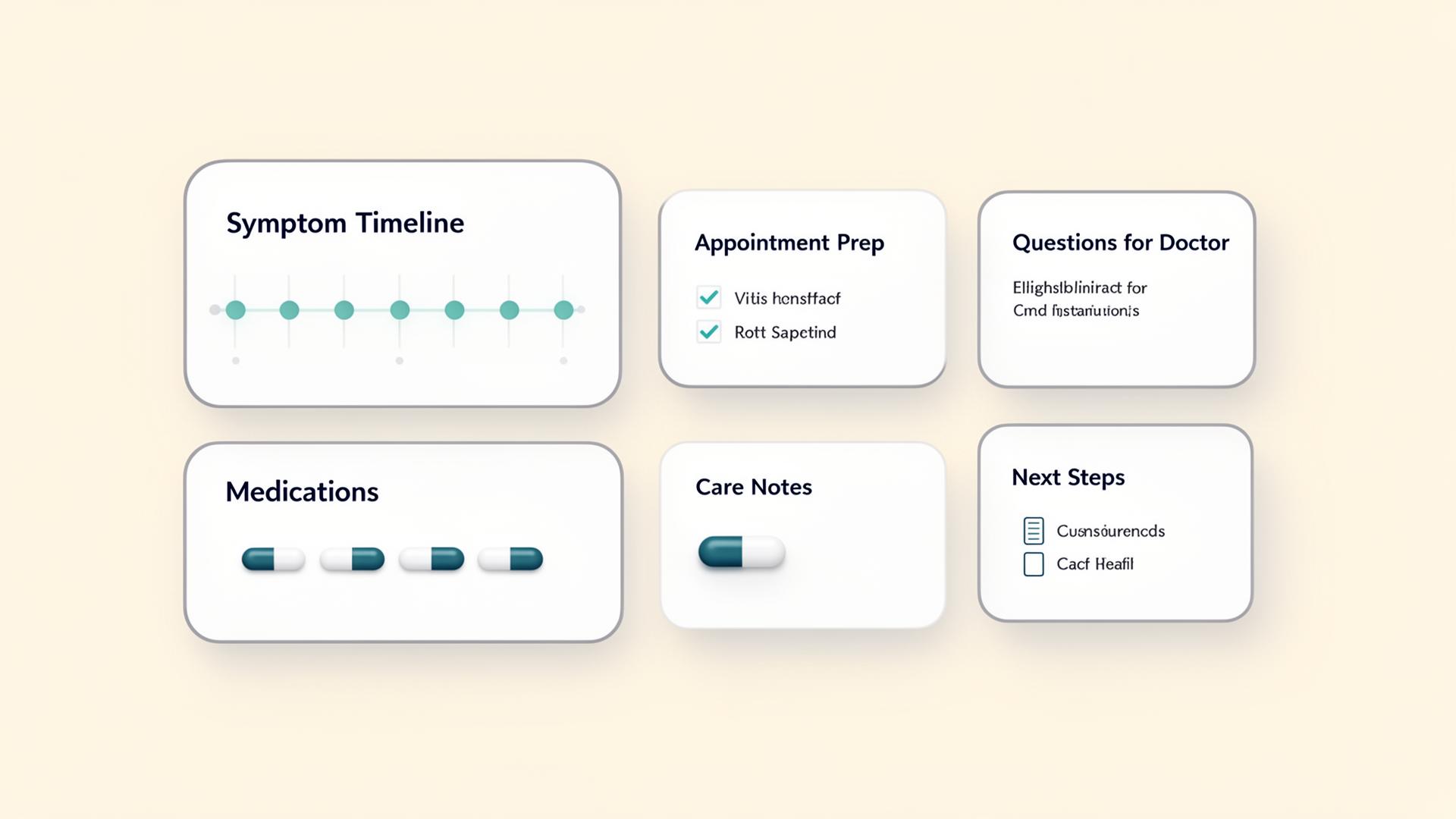
- Bring imaging from March
- Note recent dosage change
- Summarize sleep log
- 1What pattern do you see across these episodes?
- 2Should we adjust the preventive plan?
- 3Is imaging worth repeating now?
Sleep improved this week. Two episodes followed long screen days. Caregiver noted morning fatigue trending down.
Confirm referral to neurology. Share timeline summary 24 hours before visit.
Healthcare is full of information.
Patients are left to connect the dots.
Medical records live in portals. Symptoms live in memory. Questions come up after the appointment. Family members hear different pieces of the story. And when care is fragmented, important patterns can get missed.
Scattered records
Notes live in portals, inboxes, paper folders, and memory. The full picture is rarely in one place.
Rushed appointments
Short visits mean important context, questions, and patterns get left out — or remembered later.
Missed patterns
When symptoms and events aren't tracked together, trends that matter can quietly slip by.
Overwhelmed caregivers
Family members hold pieces of the story. Coordinating it shouldn't fall on memory alone.
The patient does not need to become the doctor.
They need a better way to advocate.
Central Health Command helps patients organize what they already know, clarify what they need to ask, and prepare for conversations with their care team. It supports better thinking, not self-diagnosis.
Central Health Command is not a replacement for professional medical care, diagnosis, or treatment. It is designed to support organization, preparation, and patient advocacy.
- Helps you prepare, not diagnose
- Brings structure to your own information
- Built to strengthen the patient–clinician relationship
From scattered information
to clear next steps.
Gather
Upload or enter symptoms, notes, records, medications, appointment details, and questions.
Organize
Create a structured timeline and care overview that helps you see what happened, when, and why it matters.
Prepare
Generate appointment questions, discussion points, and summaries to bring to your care team.
Advocate
Track next steps, instructions, follow-ups, and unresolved concerns across visits.
Built for the moments
when clarity matters most.
Symptom and event timeline
See what's happened — and when — at a glance.
Appointment preparation
Walk in organized, ready to make the most of limited time.
Doctor question builder
Draft and refine the questions that matter most.
Medication and treatment tracker
Keep dosages, changes, and reactions in one place.
Caregiver notes
Capture what family members and helpers observe between visits.
Medical record summary
Turn scattered documents into a clear overview.
Follow-up tracker
Don't lose the thread between appointments and referrals.
Personal advocacy journal
A private place to think through decisions and concerns.
"Patients should not have to rely on memory, scattered notes, and disconnected portals to make sense of their own care."
Built from lived experience.
Central Health Command was created from a simple belief: patients should not have to rely on memory, scattered notes, and disconnected portals to make sense of their own care.
When the system is fragmented, patients need tools that help them organize, prepare, and advocate — without losing the human relationship at the center of healthcare.
We are building Central Health Command for the people who carry the weight of navigating complex health journeys.

Emmy Hernandez
Founder, Central Health Command · Co-Founder & CMO, System and Soul AI Institute
Central Health Command was born from personal necessity. When Emmy was on the brink of death, specialists were working in silos, critical patterns were being missed, and her concerns were being dismissed.
By organizing her symptoms, history, and questions in one place, she was able to recognize patterns across her care, ask sharper questions, surface updated treatment options, and advocate for herself — helping her avoid major surgery and find a path forward.
She built Central Health Command so that no patient or caregiver has to walk into a high-stakes appointment unprepared, unheard, or alone.
For patients and caregivers
navigating complexity.
Preparing for a specialist visit
Bring a clear summary, your history, and the questions that matter.
Managing chronic or recurring symptoms
Track patterns across weeks and months, not just single moments.
Supporting a loved one through care
Keep family members aligned with a shared, organized picture.
Tracking post-procedure instructions
Don't lose the details that matter after you leave the office.
Organizing multiple opinions or referrals
Compare guidance across providers without losing the thread.
Remembering what to ask when time is limited
Walk in prepared, and walk out with clearer next steps.
Designed to support care,
not replace it.
Patient-owned information
Your information belongs to you. It stays organized for you, by you.
Clear medical disclaimers
We are transparent about what this platform is and is not.
No diagnosis claims
We do not diagnose, treat, cure, or prevent disease.
Built for preparation and advocacy
Designed to help you participate more confidently in your care.
Privacy-conscious design
Thoughtful choices about what we collect and how we handle it.
Human-centered AI
AI supports your thinking. It never replaces your clinicians.
Be first to join Central Health Command.
We are building a calmer, clearer way for patients and caregivers to navigate complex health journeys. Join the waitlist for early access, updates, and patient advocacy resources.
- Priority early access
- Patient advocacy resources
- Thoughtful, infrequent updates